Locate
Begin with the period, setting and purpose that shaped the object.
An illustrated history of form
Follow the changing language of Italian sculpture from the Middle Ages to the present: devotional objects, public monuments, intimate figures and experiments in material.
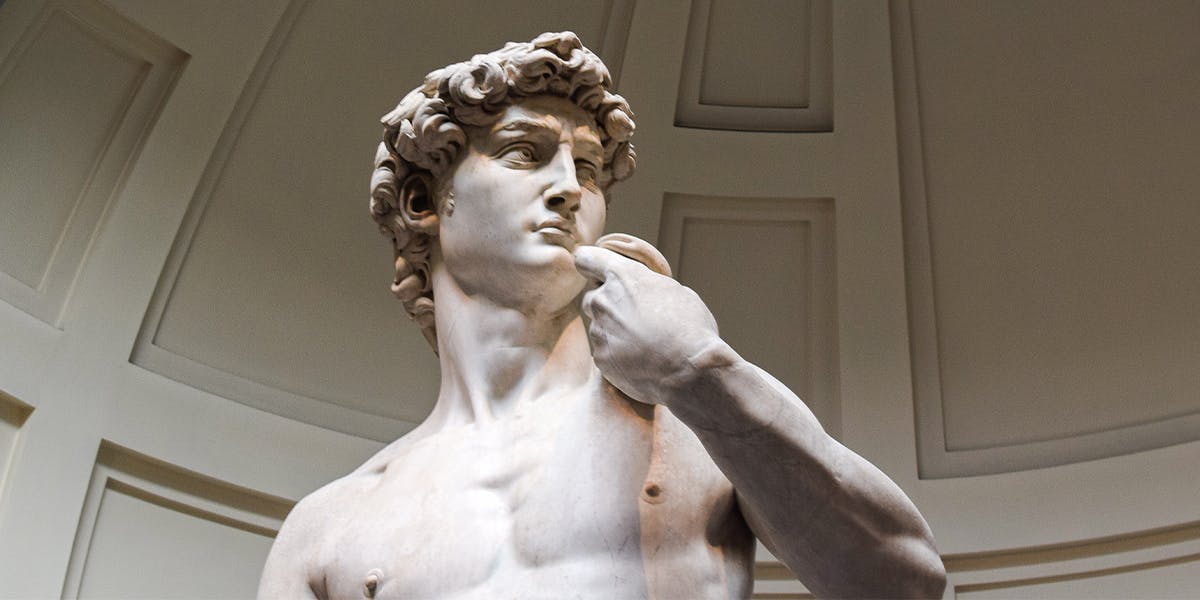 Sculptural study / 01
About this section
This visual guide places major periods beside the formal questions that connect them: the treatment of the body, the role of movement, the weight of material and the changing relationship between sculpture and its setting.
Vertical rhythm, sacred presence and expressive detail.
Movement, theatrical space and forms caught in action.
Abstraction, new materials and the figure reconsidered.
An index for navigating sculptors and recurring ideas.
How to read a work
Begin with the period, setting and purpose that shaped the object.
Notice scale, surface, stance, light and the direction of the gaze.
Place one solution beside another to see what changes across time.
Revisit the work after learning its context; details often arrive later.
Questions
It is an illustrated overview of Italian sculpture, moving from Gothic and Baroque works to modern practices and an index of artists.
The Gothic period provides a clear starting point for considering devotional sculpture, verticality, expressive surfaces and the relationship between figure and architecture.
Use them as focused introductions. Move between the periods, then consult the artist index when a name or connection deserves another path.
No. They are a selective editorial guide intended to encourage further looking and reading rather than replace a full catalogue.
For general enquiries about the collection, write to info@thais.it-index.it.